Google Quantum AI proves quantum contextuality works at scale on Willow processor
According to Google Research: Google Quantum AI researchers report demonstrating quantum contextuality on their Willow superconducting quantum processors, outperforming classical strategies across tasks involving up to 105 qubits.

Original image temporarily unavailable
According to Google Research:
Beating the classical limit
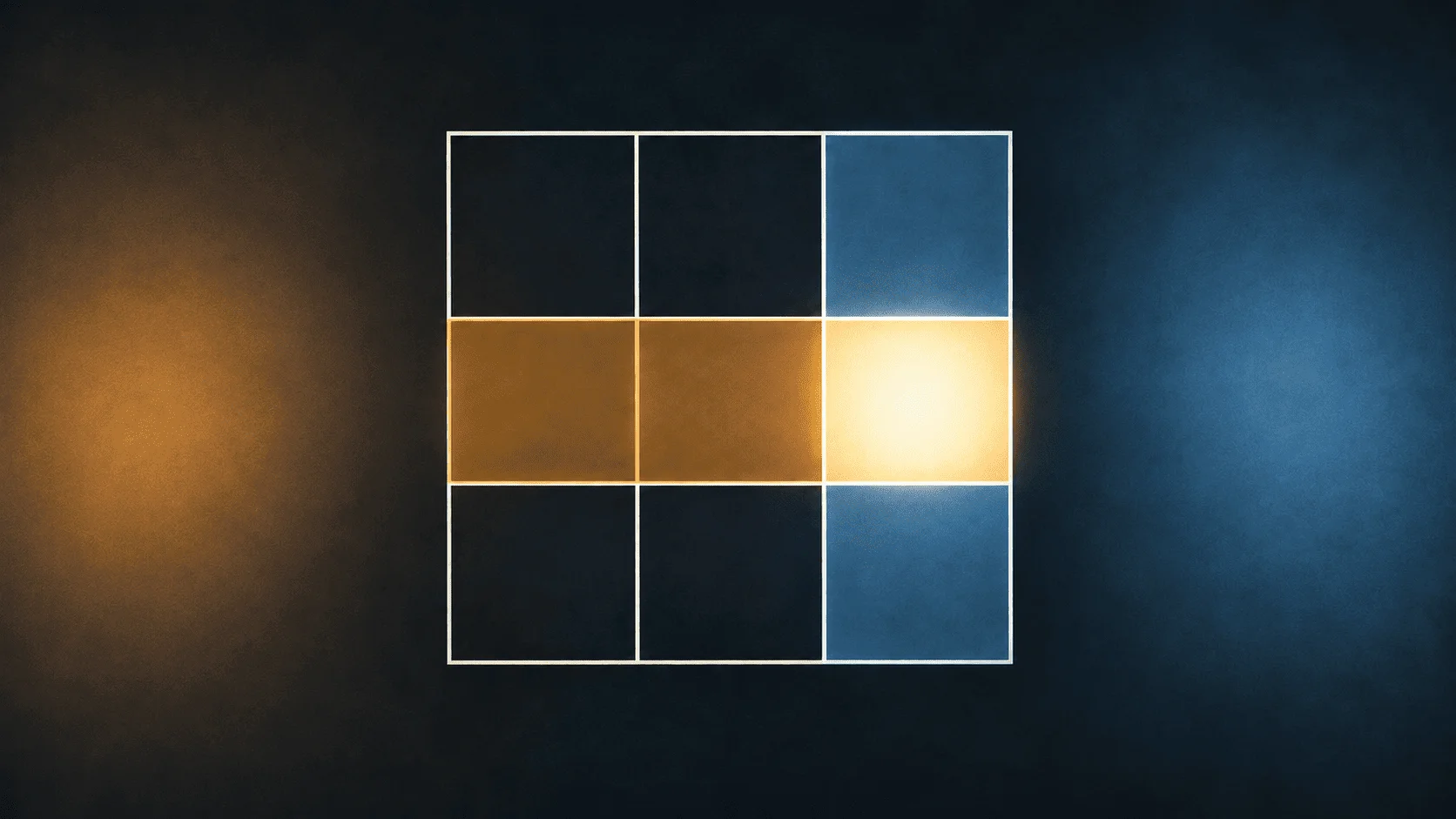
Researchers ran the magic square game on the Willow quantum processor, using entangled Bell pairs instead of a pre-written table. While the best classical strategy wins at most 88.89% of the time, the qubits won 98.30% of the time, proving that answers take shape only upon measurement according to their context.
Measuring contextuality at scale
Using a Bell-Kochen-Specker inequality, the team measured a contextuality score of 5.590, comfortably past the classical bound of 4 and close to the quantum limit of 6. They also scaled the experiment using the GHZ parity game and solved hidden linear function problems on grids of up to 105 qubits.
A new hardware ruler
These tasks demand strict agreement among multiple qubits, exposing subtle coherent errors that conventional random-circuit benchmarks miss. This provides an objective performance ceiling grounded in physics rather than shifting classical standards.
View selection rationale
Importance 90/100
About this brief
- Content type
- Research summary
- Source type
- First-party / official source
- Original source
- Google Research ↗
- Source published
- Process
- AI-assisted discovery, translation, summarisation, classification and scoring; standards and corrections are maintained by the editorial desk.
- Verification
- The original URL and publication metadata are retained. This brief is not independently fact-checked unless explicitly stated.
- Published by
- Polyemergence Editorial Desk · PolyEmergence Pte Ltd.
- Conflict disclosure
- No financial or commercial conflict declared.