
Google's Quantum Chip Beats Classical Limits in Tests of Teamwork
Google Quantum AI researchers used their Willow processor to show that quantum contextuality can outperform classical strategies in cooperative games. The chip won a four-qubit game 98.3% of the time, beating the classical limit, and successfully scaled past classical limits with up to 71 qubits, offering a new method to detect hardware errors.
Original image temporarily unavailable
Cooperative Games and Quantum Contextuality
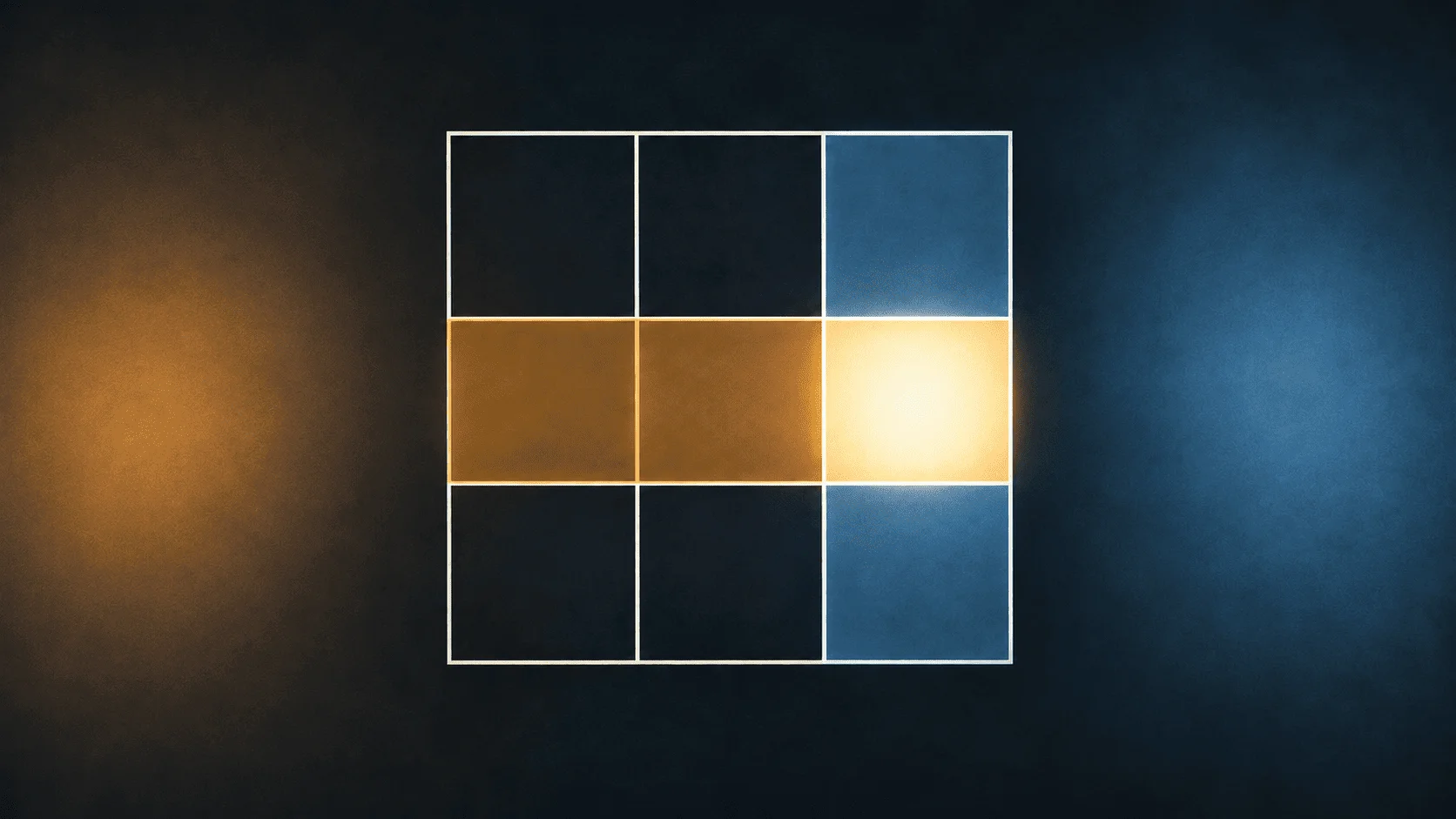
Researchers at Google Quantum AI utilized the Willow processor to investigate quantum contextuality, a property where measurement outcomes depend on accompanying measurements. In a magic square game preventing player communication, four qubits achieved a 98.3% winning rate, surpassing the 88.9% classical limit.
Scaling Up to 71 Qubits
The team scaled the experiments using a Greenberger-Horne-Zeilinger state. The winning rate stayed above the classical ceiling through 71 players, although the performance margin shrank as more qubits were introduced due to experimental noise.
Mathematical Problem and Error Detection
In a final test involving a two-dimensional hidden linear function, a 105-qubit experiment returned valid answers more than half the time. The researchers note that these tests can help spot subtle hardware errors that conventional checks might miss.
View selection rationale
Importance 79/100
About this brief
- Content type
- Research summary
- Source type
- Publisher report
- Original source
- The Quantum Insider ↗
- Source published
- Process
- AI-assisted discovery, translation, summarisation, classification and scoring; standards and corrections are maintained by the editorial desk.
- Verification
- The original URL and publication metadata are retained. This brief is not independently fact-checked unless explicitly stated.
- Published by
- Polyemergence Editorial Desk · PolyEmergence Pte Ltd.
- Conflict disclosure
- No financial or commercial conflict declared.
