
Supernodes Move to Scale Delivery as AI Computing Enters a New Infrastructure Race
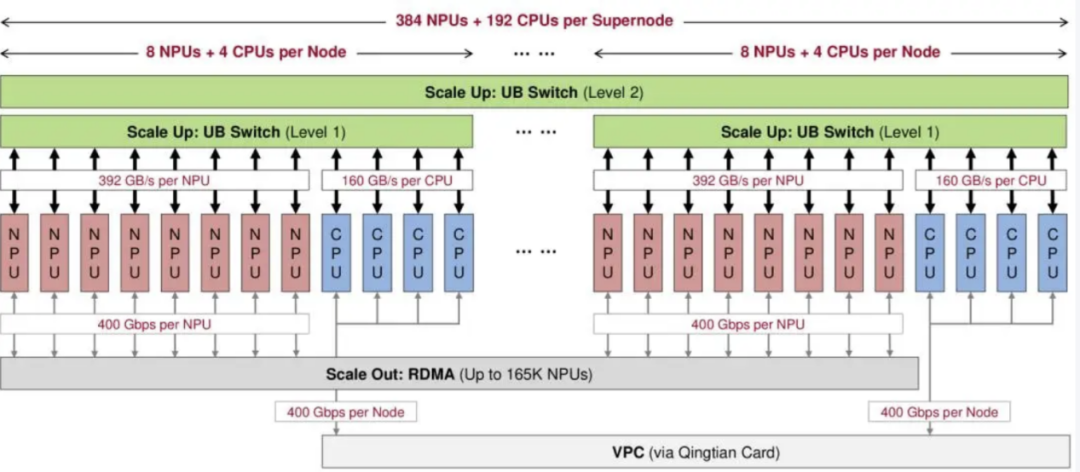
AI computing is shifting from simply adding more chips to building tightly coupled systems called supernodes. Instead of traditional clusters wasting time on cross-node communication delays, supernodes tightly link hundreds or thousands of GPUs together into what acts as a single giant chip, dramatically boosting training efficiency.
Original image temporarily unavailable
The Shift from Scale-out to Scale-up
Traditional AI training used thousands of scattered GPUs connected via standard networks, causing massive communication delays and high idle rates. Supernodes use a Scale-up architecture to pack hundreds of cards into a single rack or pod, using high-speed interconnects like NVLink, Lingqu, or optical links to achieve ultra-low latency and unified memory addressing.
The Battle for Interconnect Standards
Whoever defines the interconnect protocol wins the industry. Tech giants like Nvidia, Huawei, and Alibaba are rolling out proprietary architectures to control the future of data centers. Meanwhile, modular pre-integrated designs are slashing deployment times from months to just two weeks, driving a massive boom in liquid cooling, high-speed connectors, and custom switching chips.
Domestic Strategies and Future Challenges
Chinese manufacturers are using supernode architecture to compensate for advanced manufacturing gaps, turning system-level integration into a competitive moat. However, scaling up past thousands of cards still poses software and hardware hurdles, making interconnect efficiency the ultimate ceiling for the next generation of AI infrastructure.
View selection rationale
Importance 87/100
About this brief
- Content type
- News summary
- Source type
- Publisher report
- Original source
- TMTPost 钛媒体 ↗
- Source published
- Process
- AI-assisted discovery, translation, summarisation, classification and scoring; standards and corrections are maintained by the editorial desk.
- Verification
- The original URL and publication metadata are retained. This brief is not independently fact-checked unless explicitly stated.
- Published by
- Polyemergence Editorial Desk · PolyEmergence Pte Ltd.
- Conflict disclosure
- No financial or commercial conflict declared.