
Stanford Physicist Uses AI to Tackle Quantum Gravity
A Stanford physicist has proposed a quantum theory of gravity using the paths of light, which successfully yielded a finite calculation and reproduced a known black hole entropy correction. The researcher stated that the work involved months of collaboration with OpenAI's GPT-6 Astra, utilizing about 400 million tokens.
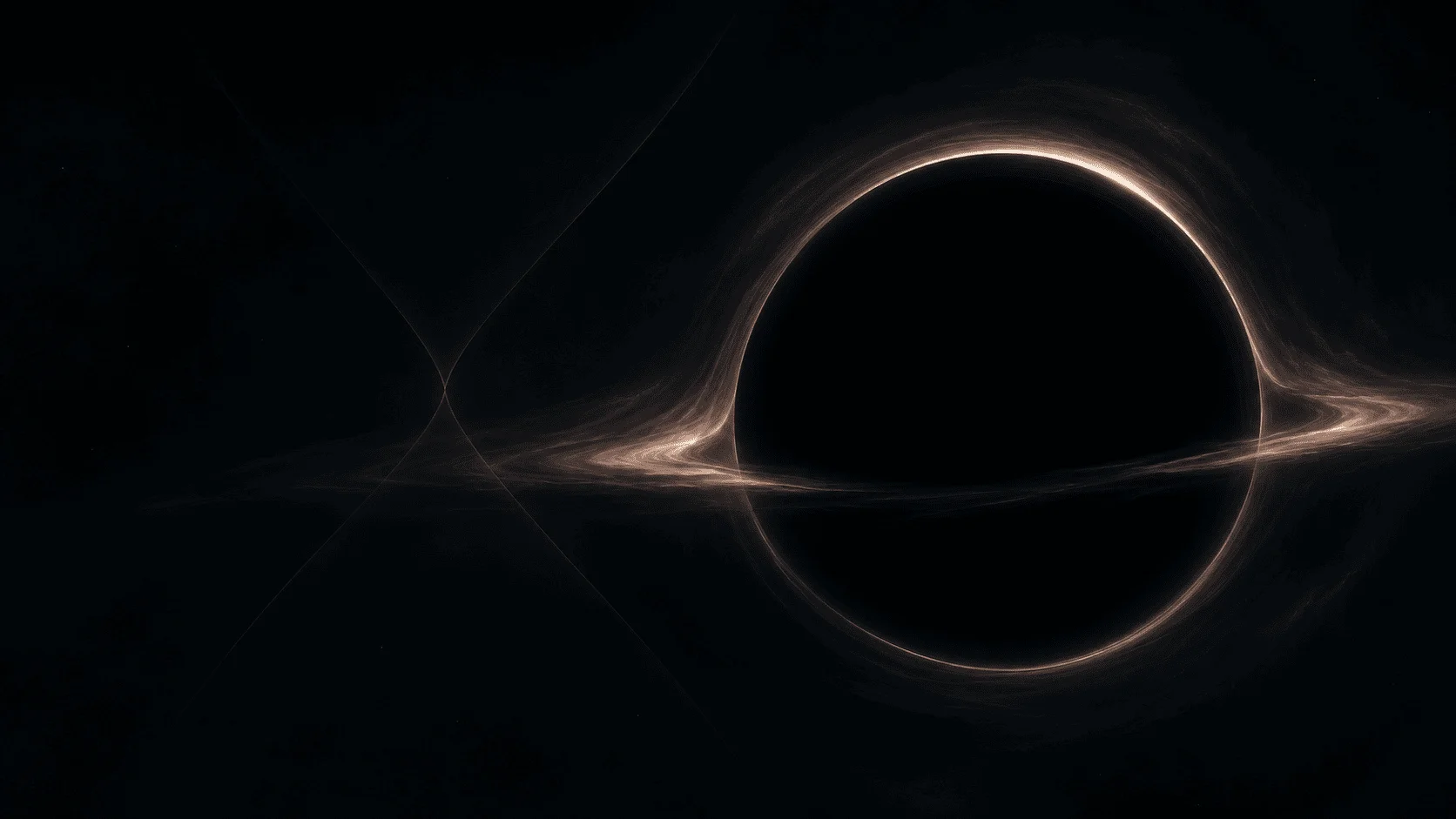
Original image temporarily unavailable
Background and Approach
Reconciling general relativity with quantum mechanics has challenged physicists for decades. Stanford researcher Venkatesa Chandrasekaran proposed using light paths to establish the boundaries of finite spacetime regions, allowing calculations to avoid infinite divergence.
Calculations and AI Collaboration
By keeping the gravitational constant at its physical value, the approach produced finite answers in a graviton-pair calculation. The author acknowledged that several proofs and calculations were developed through months of back-and-forth work with OpenAI's GPT-6 Astra, consuming roughly 400 million tokens.
Status and Limitations
The study also recovered the standard relationship between black hole entropy and surface area, alongside a quantum correction. However, the paper is currently a preprint on arXiv and has not yet undergone official peer review.
View selection rationale
Importance 88/100
About this brief
- Content type
- Research summary
- Source type
- Publisher report
- Original source
- The Quantum Insider ↗
- Source published
- Process
- AI-assisted discovery, translation, summarisation, classification and scoring; standards and corrections are maintained by the editorial desk.
- Verification
- The original URL and publication metadata are retained. This brief is not independently fact-checked unless explicitly stated.
- Published by
- Polyemergence Editorial Desk
- Conflict disclosure
- No financial or commercial conflict declared.