
High-Entropy Alloys Could Make Nanoporous Metals Less Brittle
A recent study in npj Computational Materials explores how high-entropy alloys could help fix the brittle nature of nanoporous metals. By using computer simulations, researchers found that these special alloys can improve strain hardening and strength, which might lead to better lightweight and shock-absorbing materials.
Original image temporarily unavailable
Background and Simulation
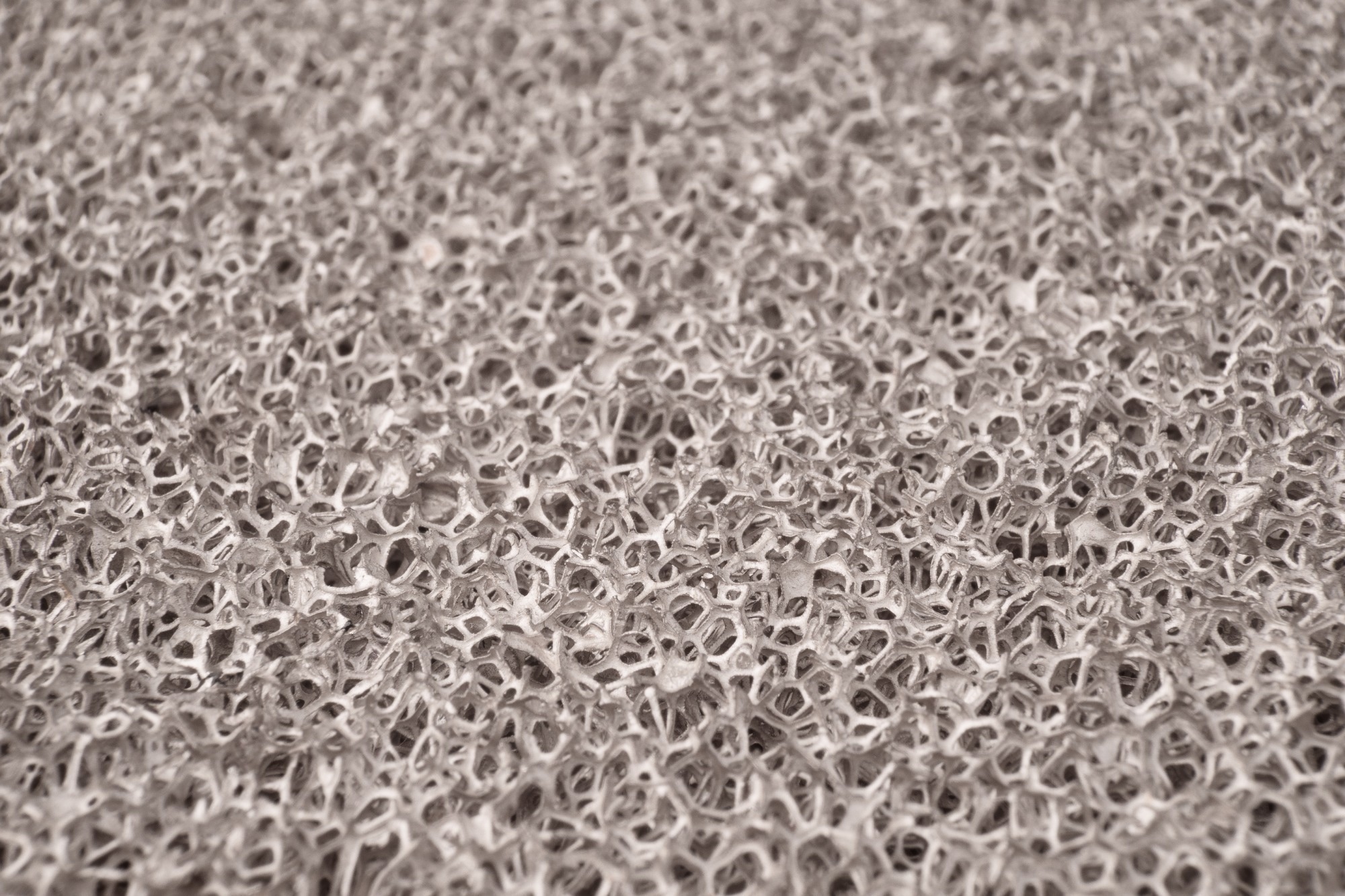
Nanoporous metals are extremely light and have a huge surface area, making them great for absorbing energy. However, when you pull on them, they tend to snap easily because a crack in one tiny part quickly spreads to the rest. To solve this, researchers used computer models to test two types of high-entropy alloys, Al 0.1 CoCrFeNi and NbMoTaW, checking how they handle stretching and squeezing at different temperatures.
Mechanisms and Performance
The simulations showed that these alloys get their high strength from two main things: defects disappearing at the surface, and sluggish dislocation movement that helps with strain hardening. The two alloys handled stress differently because of their crystal structures. Overall, the tested high-entropy alloys showed specific yield strengths up to five times higher than typical nanoporous materials, though the researchers noted that real-world tests and lower simulation speeds are still needed to confirm these results.
View selection rationale
Importance 66/100
About this brief
- Content type
- Research summary
- Source type
- Publisher report
- Original source
- AZoM Materials News ↗
- Source published
- Process
- AI-assisted discovery, translation, summarisation, classification and scoring; standards and corrections are maintained by the editorial desk.
- Verification
- The original URL and publication metadata are retained. This brief is not independently fact-checked unless explicitly stated.
- Published by
- Polyemergence Editorial Desk
- Conflict disclosure
- No financial or commercial conflict declared.