
AI model connects molecular structures and spectra in any direction
According to Lila Sciences: Researchers at Lila Sciences have developed an AI model called MOSAIC that treats molecular structures and different spectral measurements as interchangeable. By enabling any-to-any generation, the model can predict molecular structures from spectra with 88.8% accuracy in experiments, outperforming baseline methods by over 20%.

Original image temporarily unavailable
According to Lila Sciences:
Background and Method
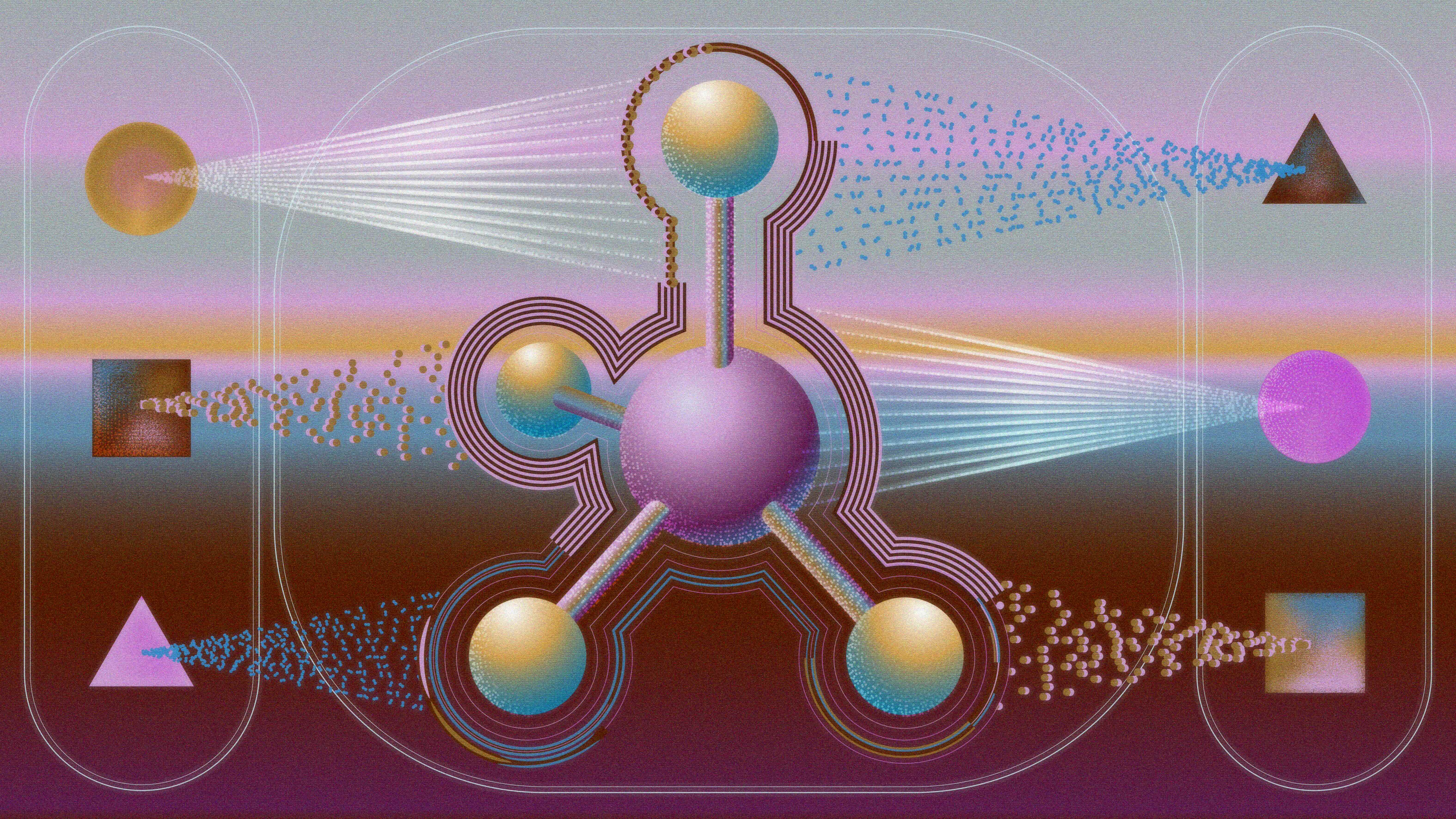
In March 2026, AI researchers Thorben Prein and Elton Pan at Lila Sciences identified a gap in materials science AI: most models only translate between molecular structures and spectra in a single direction. To solve this, they developed MOSAIC, an any-to-any method accepted for the NeurIPS 2026 conference. The approach combines infrared, UV, and Raman spectral modalities alongside molecular structures, treating all four data types as interchangeable viewpoints of the same molecule, much like multiple people describing an elephant from different angles.
Performance and Validation
In experiments, MOSAIC predicted correct molecular structures from spectra 88.8% of the time, significantly outperforming traditional baselines. Independent expert Kevin Maik Jablonka noted that while the method tackles an important problem by combining evidence sources, future work must demonstrate its effectiveness on complex mixtures and noisy experimental data rather than just pure, small molecules.
Future Outlook
The researchers plan to scale the model using more simulated and proprietary lab data through industry partnerships. They believe this multimodal flow matching approach could eventually generalize to drug design and renewable energy materials, helping scientists reduce experiments, lower costs, and speed up discovery.
View selection rationale
Importance 83/100
About this brief
- Content type
- Research summary
- Source type
- First-party / official source
- Original source
- Lila Sciences ↗
- Source published
- Process
- AI-assisted discovery, translation, summarisation, classification and scoring; standards and corrections are maintained by the editorial desk.
- Verification
- The original URL and publication metadata are retained. This brief is not independently fact-checked unless explicitly stated.
- Published by
- Polyemergence Editorial Desk · PolyEmergence Pte Ltd.
- Conflict disclosure
- No financial or commercial conflict declared.