
MIT engineers develop dry, stretchy material to replace ultrasound gel
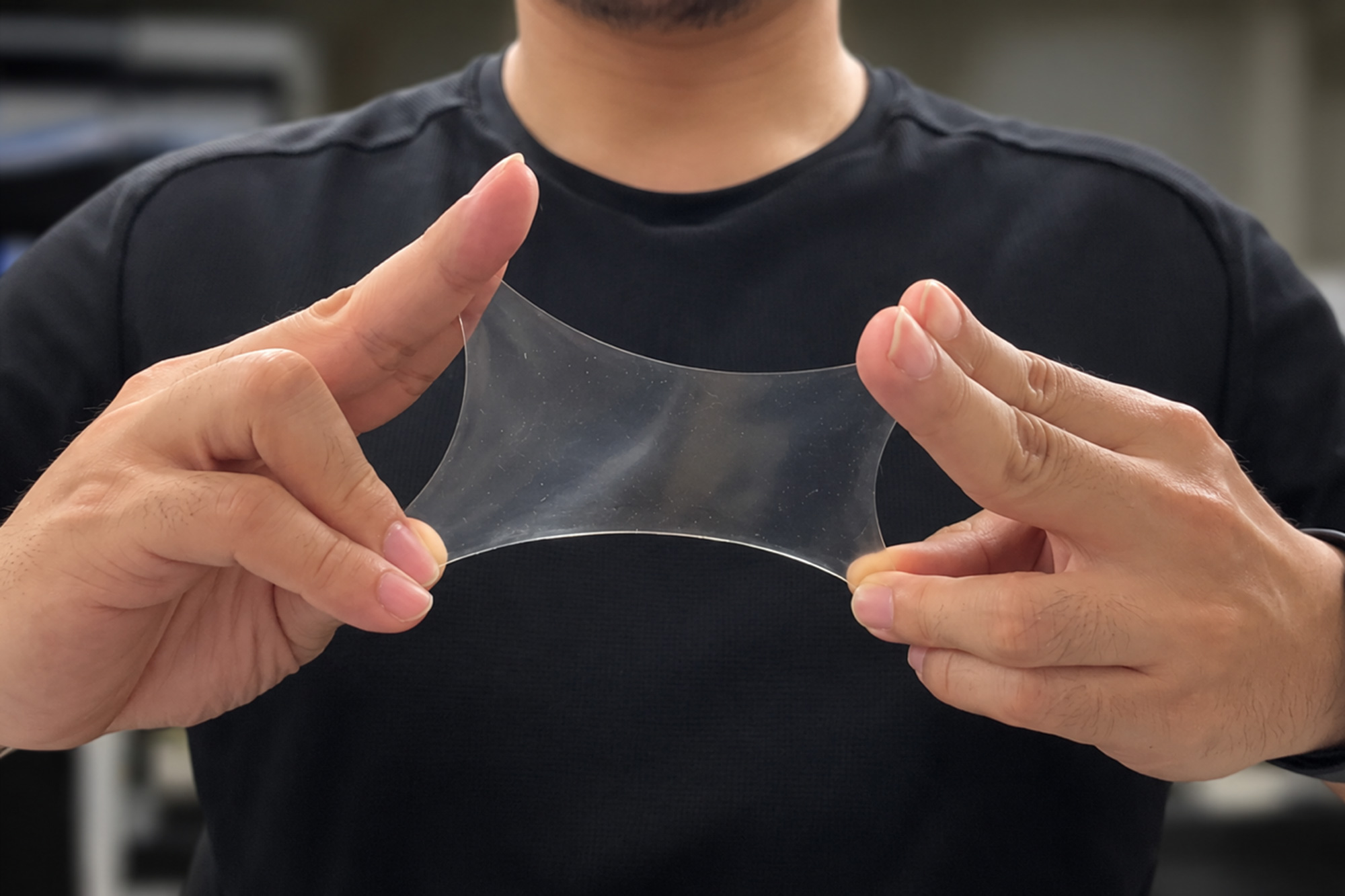
According to MIT Materials: Researchers at MIT have created a dry and stretchy material that replaces the sticky, wet gel traditionally required for ultrasound imaging. Because conventional gels dry out quickly, they are poorly suited for long-term wearable health monitoring.

Original image temporarily unavailable
According to MIT Materials:
Background
Ultrasound imaging normally requires a cold, wet gel spread on the patient's skin to fill microscopic gaps and help sound waves travel smoothly. While MIT's Zhao Lab is designing wearable ultrasound patches for continuous health tracking, traditional hydrogels dry out within a day or two, limiting their long-term use outside of clinics.
Details
To solve this, the MIT team engineered a solid, rubbery material using a unique molecular "bottlebrush" structure. By arranging molecules like pipe cleaners with bristles, the team minimized internal friction between polymer chains so sound waves could pass through easily. They reinforced this soft structure with a secondary network, making it tough and skin-like while keeping its sound-transmitting properties intact.
Impact
In experiments published in *Science*, a small wearable patch using this dry material successfully captured continuous, clear ultrasound images of a volunteer's blood flow during a 30-minute bike ride and remained stable for nine days. This breakthrough could soon enable practical, at-home ultrasound monitoring for patients and athletes without the hassle of sticky gels.
View selection rationale
Importance 83/100
About this brief
- Content type
- Research summary
- Source type
- First-party / official source
- Original source
- MIT Materials ↗
- Source published
- Process
- AI-assisted discovery, translation, summarisation, classification and scoring; standards and corrections are maintained by the editorial desk.
- Verification
- The original URL and publication metadata are retained. This brief is not independently fact-checked unless explicitly stated.
- Published by
- Polyemergence Editorial Desk · PolyEmergence Pte Ltd.
- Conflict disclosure
- No financial or commercial conflict declared.