
How ocean carbon storage works during ice ages
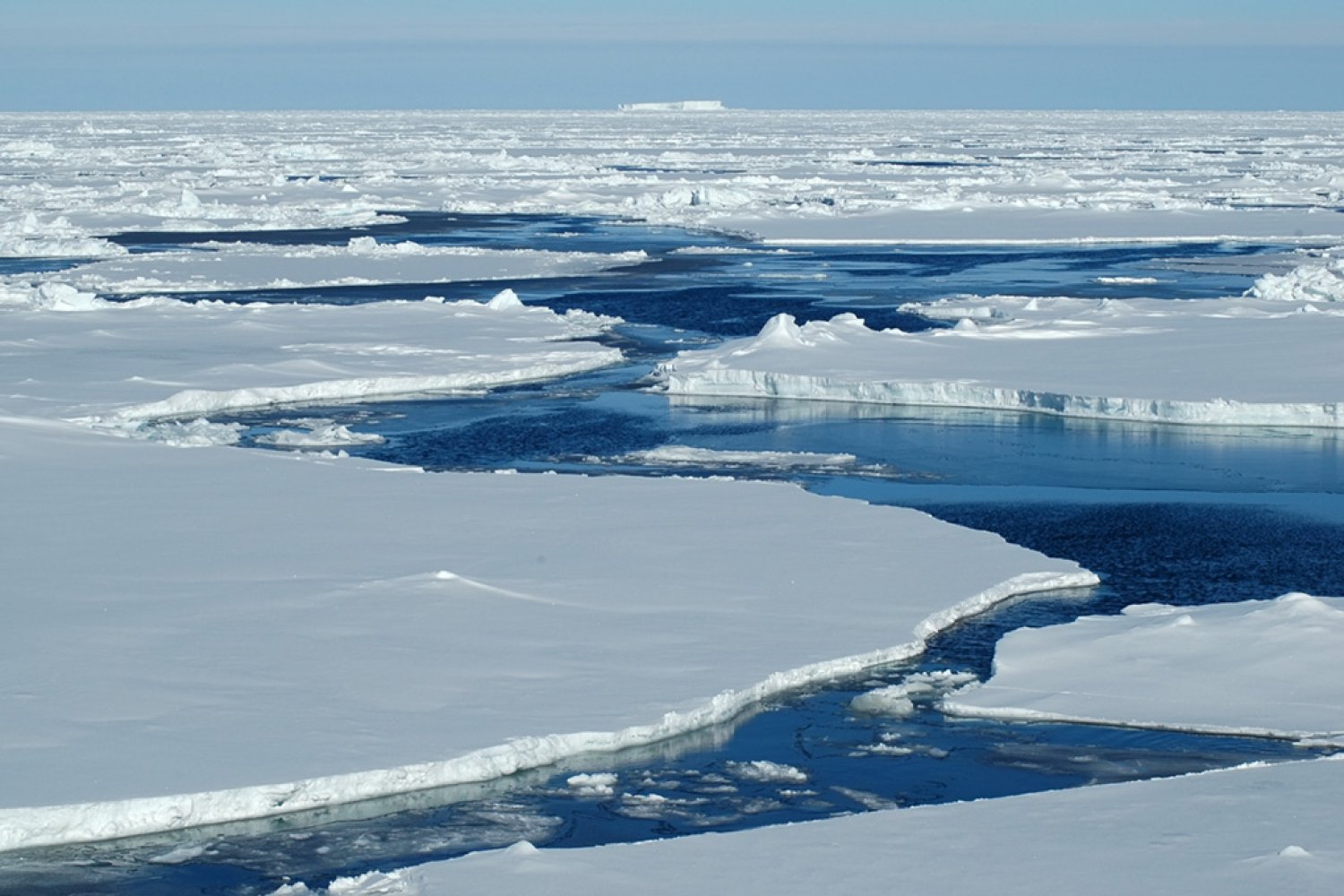
According to MIT Climate: Researchers at MIT and the Université du Québec à Rimouski report in Science Advances that combining multiple climate processes in the Southern Ocean during ice ages explains how atmospheric carbon dioxide is drawn down.
Original image temporarily unavailable
According to MIT Climate:
Background
Over the past 800,000 years, Earth's climate has swung between warm periods and ice ages driven by orbital shifts and changing greenhouse gas levels. Scientists study how carbon is exchanged between the atmosphere and the ocean to better understand future climate scenarios.
Research Details
Researchers used a climate model to study Southern Ocean processes, including seawater cooling, sea-ice expansion, and ocean circulation changes. Traditionally, scientists studied these mechanisms independently to isolate cause and effect. However, when run separately, sea ice or glacial circulation alone showed little to no carbon drawdown, and solubility changes alone did not account for the results. When the researchers ran a full experiment coupling sea ice, circulation, and cooling, they observed significant carbon dioxide drawdown and a heavy concentration in the disequilibrium carbon pool.
Implications
The findings suggest that coupled physical processes are key drivers of ice age ocean carbon storage. When sea ice and circulation act together, they significantly reduce the exposure time of upwelled deep ocean water to the atmosphere, trapping carbon inside the ocean. Additionally, the researchers noted that changes in the Atlantic Meridional Overturning Circulation can alter water mass boundaries, affecting how carbon escapes.
View selection rationale
Importance 58/100
About this brief
- Content type
- Research summary
- Source type
- First-party / official source
- Original source
- MIT Climate ↗
- Source published
- Process
- AI-assisted discovery, translation, summarisation, classification and scoring; standards and corrections are maintained by the editorial desk.
- Verification
- The original URL and publication metadata are retained. This brief is not independently fact-checked unless explicitly stated.
- Published by
- Polyemergence Editorial Desk · PolyEmergence Pte Ltd.
- Conflict disclosure
- No financial or commercial conflict declared.