
Bill Gates-backed Breakthrough Energy says global decarbonization would cost 7.5 trillion dollars
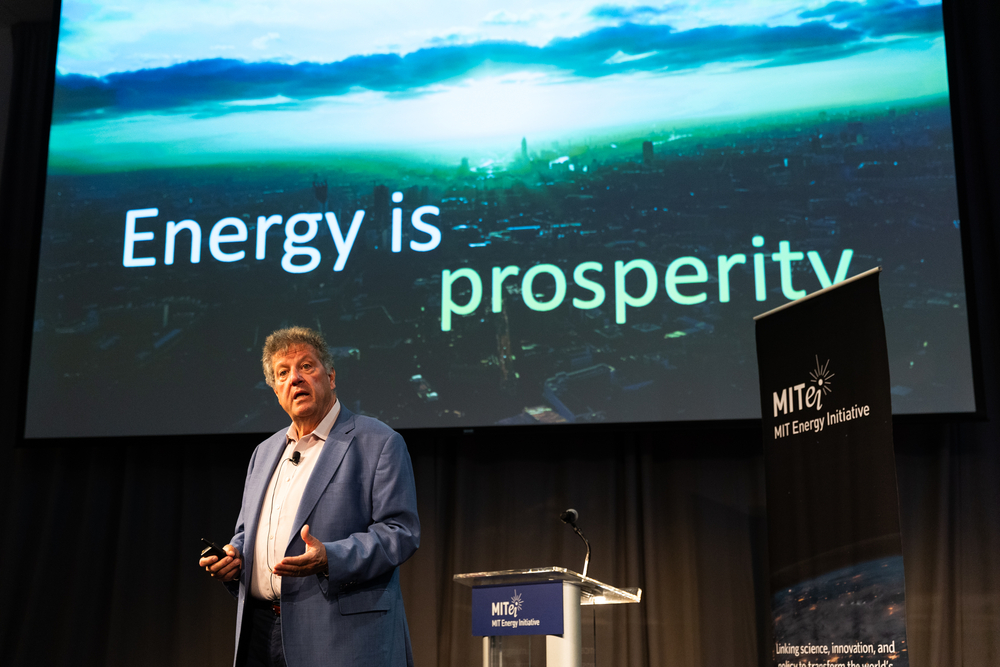
According to MIT Climate: At an MIT energy conference, Breakthrough Energy CTO Eric Toone reported that global decarbonization would cost roughly 7.5 trillion dollars, or 5 percent of world GDP.

Original image temporarily unavailable
According to MIT Climate:
Background and Costs
Eric Toone, chief technical officer at Breakthrough Energy, spoke at MIT's annual energy conference, highlighting that rising global prosperity inherently drives up energy demand and greenhouse gas emissions. According to Toone, while decarbonizing the world economy is entirely feasible, the true challenge lies not just in the calculated 7.5 trillion dollar cost, but in the reality that consumers and even wealthy individuals are largely unwilling to pay extra for zero-carbon alternatives. By enlisting artificial intelligence, the organization estimated this multi-trillion-dollar price tag, which could potentially drop to 3.5 trillion dollars if emerging technologies succeed.
Technology Solutions
Breakthrough Energy Ventures has deployed approximately 3 billion dollars into roughly 140 companies tackling clean energy challenges. Noteworthy examples include Luxwall, which produces highly insulating windows capable of cutting commercial building energy use by 30 percent, and Form Energy, which is developing iron-air batteries designed to store power for up to a month. Other portfolio companies are addressing cement emissions, upgrading transmission lines, advancing geothermal drilling through adapted fracking technology, and creating magnetic containment solutions for fusion energy.
Industry Impact
Toone noted that while Breakthrough's investments are substantial, they represent only a fraction of broader global clean tech funding. The ultimate hurdle facing the energy transition is the sheer scale of existing infrastructure that must be replaced, making it critical to deploy these innovative technologies directly into emerging and developing economies to prevent future carbon-heavy infrastructure buildouts.
View selection rationale
Importance 77/100
About this brief
- Content type
- News summary
- Source type
- First-party / official source
- Original source
- MIT Climate ↗
- Source published
- Process
- AI-assisted discovery, translation, summarisation, classification and scoring; standards and corrections are maintained by the editorial desk.
- Verification
- The original URL and publication metadata are retained. This brief is not independently fact-checked unless explicitly stated.
- Published by
- Polyemergence Editorial Desk · PolyEmergence Pte Ltd.
- Conflict disclosure
- No financial or commercial conflict declared.