
MIT and Northeastern engineers design stronger, more resilient metamaterials inspired by nature
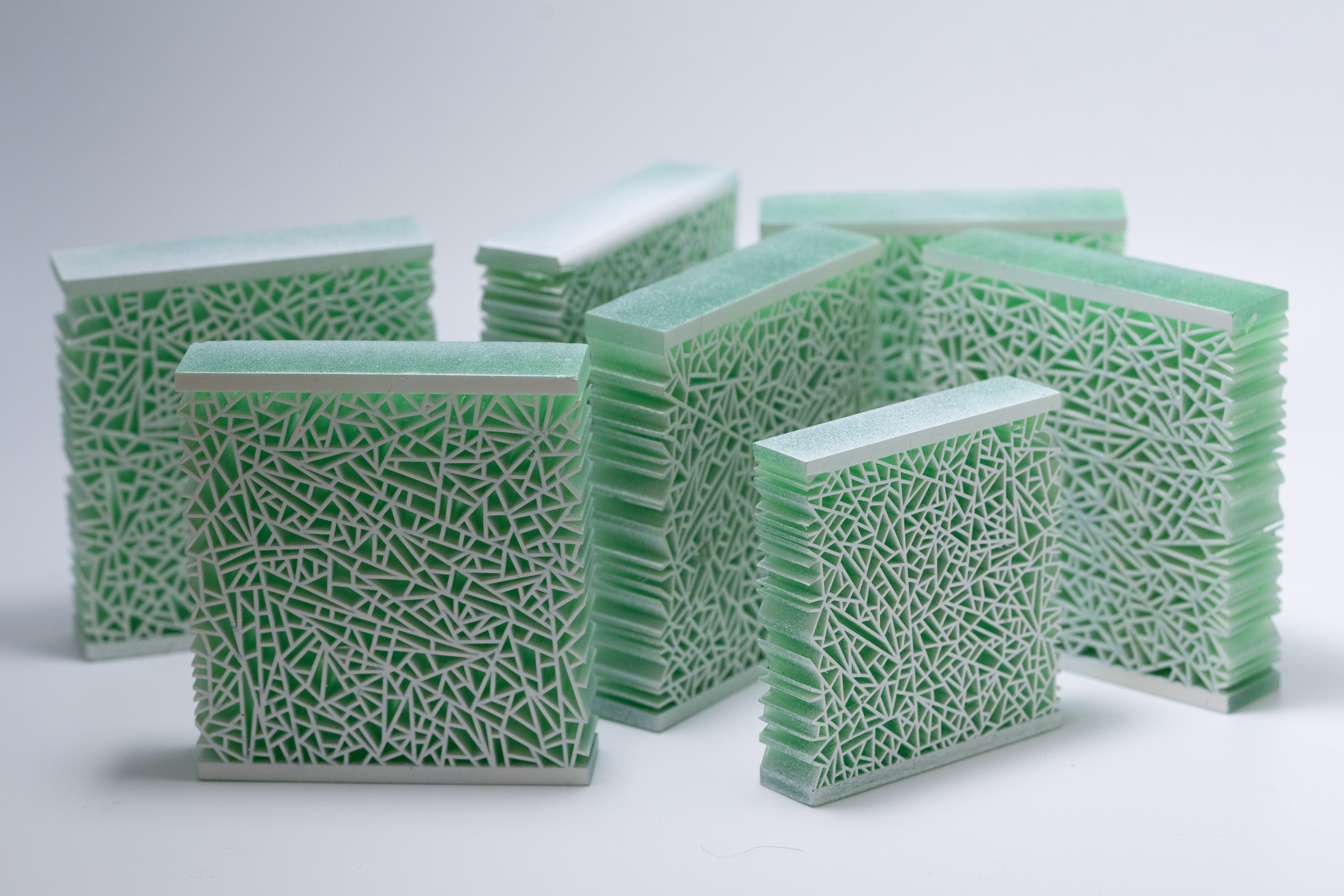
According to MIT Advanced Manufacturing: Researchers have created a new type of metamaterial by introducing controlled disorder inspired by natural networks like leaf veins and dragonfly wings. Unlike traditional materials built from repeating identical blocks, these new materials use varying sizes of beams to distribute damage and absorb impacts much better.
Original image temporarily unavailable
According to MIT Advanced Manufacturing:
Background
For decades, synthetic metamaterials have been designed using a single building block, or unit cell, copied and pasted to form a precise, periodic microstructure. While this ordered approach improves overall performance, it has a major flaw: if one region cracks, the surrounding identical cells quickly buckle, leading to catastrophic failure.
Details
To overcome this limitation, a team from MIT and Northeastern University turned to network science, a field traditionally used to study complex systems like the internet or neural connections. Using a specialized algorithm, the researchers generated a physical network of intersecting beams with varying sizes and thicknesses, mimicking the web-like structures found in nature. By 3D-printing these patterns into polymer samples, they created scale-rich metamaterials that avoid the localization effect seen in ordered structures.
Impact
Physical tests showed that these network-inspired materials offer a widely controllable range of stiffness, resist sudden impacts more effectively, and can successfully cushion fragile objects. This design framework opens the door to next-generation protective gear, impact-absorbing structures, and specialized materials that control vibrations.
View selection rationale
Importance 75/100
About this brief
- Content type
- Research summary
- Source type
- First-party / official source
- Original source
- MIT Advanced Manufacturing ↗
- Source published
- Process
- AI-assisted discovery, translation, summarisation, classification and scoring; standards and corrections are maintained by the editorial desk.
- Verification
- The original URL and publication metadata are retained. This brief is not independently fact-checked unless explicitly stated.
- Published by
- Polyemergence Editorial Desk · PolyEmergence Pte Ltd.
- Conflict disclosure
- No financial or commercial conflict declared.