
Why India and Pakistan urgently need to rewrite their historic water treaty
The historic Indus Waters Treaty between India and Pakistan is facing unprecedented suspension following regional conflicts. Experts argue that the decades-old agreement has systemic flaws regarding environmental and social sustainability.
Original image temporarily unavailable
Background
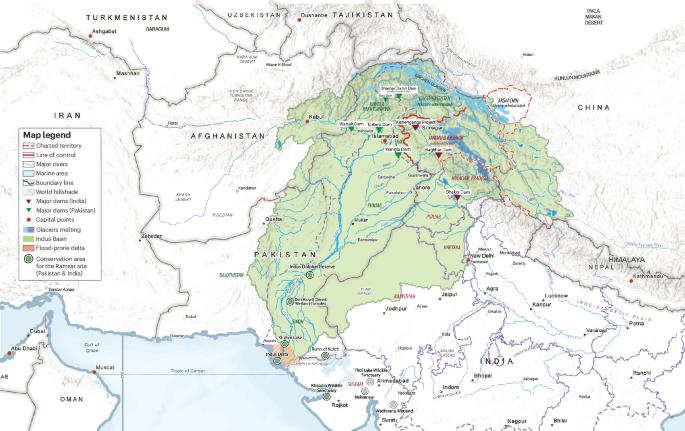
The Indus Waters Treaty (IWT), long hailed as a symbol of hydrological cooperation despite political hostility between India and Pakistan, has hit a major roadblock. Following the April 2025 terrorist attack in Kashmir, India suspended its participation in the treaty, bringing transboundary water management into uncharted and tense territory.
Core Issues and Solutions
Researchers point out that the original treaty, while managing water allocation, suffers from severe gaps in long-term environmental, political, and social sustainability. The authors argue for a complete reset by incorporating modern frameworks, such as the UN Sustainable Development Goals (Indicator 6.5.2) and international legal guidelines for ecologically viable treaties. Establishing better data exchange and regional mechanisms can transform how the two nations share this vital river basin.
Broader Impact
Beyond managing water scarcity and climate change adaptation, modernizing the IWT could serve as a vital confidence-building measure. In a heavily militarized region where two nuclear rivals share a massive border, finding common ground on water governance might just unlock a pathway to broader geopolitical stability.
View selection rationale
Importance 67/100
About this brief
- Content type
- News summary
- Source type
- Publisher report
- Original source
- Nature Water ↗
- Source published
- Process
- AI-assisted discovery, translation, summarisation, classification and scoring; standards and corrections are maintained by the editorial desk.
- Verification
- The original URL and publication metadata are retained. This brief is not independently fact-checked unless explicitly stated.
- Published by
- Polyemergence Editorial Desk · PolyEmergence Pte Ltd.
- Conflict disclosure
- No financial or commercial conflict declared.