
New tech lets spin signals travel much further at room temperature
Scientists have developed a polariton waveguide using transition metal dichalcogenides that allows spin signals to travel up to 100 micrometers at room temperature. This breakthrough combines the long-distance advantages of light with the interactive properties needed for future computing.

Original image temporarily unavailable
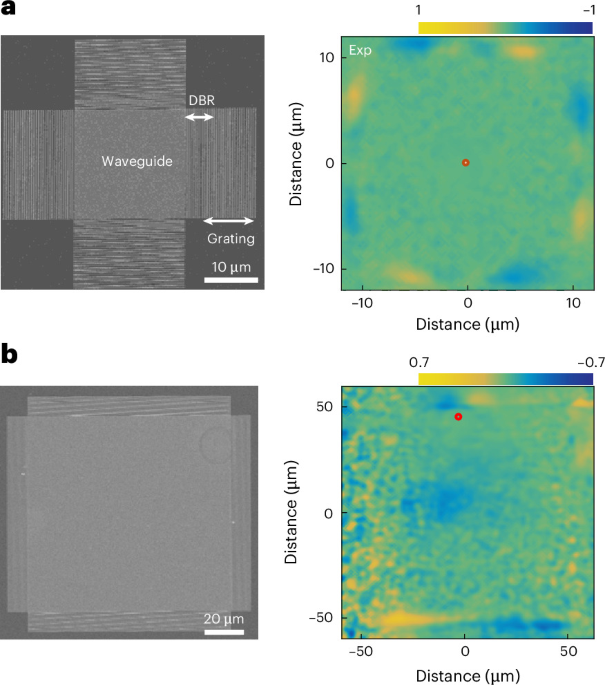
In modern electronics and spintronics, using the spin of particles to carry information is a promising idea, but these spin signals usually fizzle out over very short distances. On the other hand, photons can travel far, but they don't have the nonlinear interactions required to build logic gates for computing.
To bridge this gap, researchers turned to polaritons—hybrid particles made of light and matter. By building special waveguides out of transition metal dichalcogenides, they achieved spin propagation of up to 100 micrometers while operating entirely at room temperature. More importantly, the system retains large polariton nonlinearities, meaning it opens the door to practical, ultra-fast optical computing and advanced information processing devices that don't need extreme cooling.
View selection rationale
Importance 75/100
About this brief
- Content type
- Research summary
- Source type
- Publisher report
- Original source
- Nature Materials ↗
- Source published
- Process
- AI-assisted discovery, translation, summarisation, classification and scoring; standards and corrections are maintained by the editorial desk.
- Verification
- The original URL and publication metadata are retained. This brief is not independently fact-checked unless explicitly stated.
- Published by
- Polyemergence Editorial Desk · PolyEmergence Pte Ltd.
- Conflict disclosure
- No financial or commercial conflict declared.